Little Chef Pretend Kitchen Set — Toy Pot, Pan, Utensils, Plates & Play Food
Little Chef Pretend Kitchen Set — Toy Pot, Pan, Utensils, Plates & Play Food
Couldn't load pickup availability

Little Chef Pretend Kitchen Set — Toy Pot, Pan, Utensils, Plates & Play Food
Little Chef Pretend Kitchen Set — Create a Colorful Make-Believe Meal with a Mint Pot, Sunny Yellow Pan & Everyday Kitchen-Inspired Toys
Your imaginary kitchen is open. What will you make today? 🍳
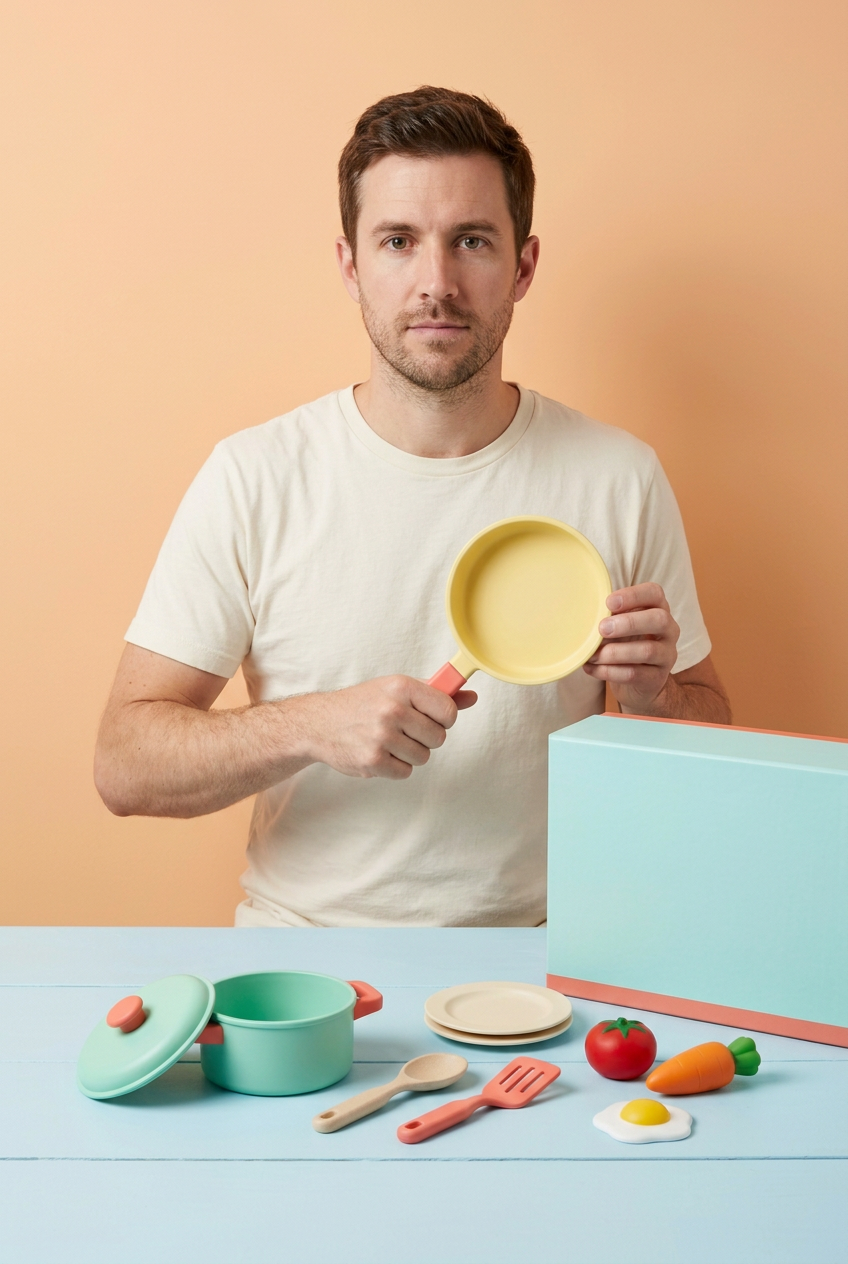
There is a mint-green pot on the table, a yellow pan beside it and a pair of cream-colored plates ready for a pretend meal. A red tomato, an orange carrot and a fried-egg-shaped toy provide the opening ingredients for a story that is entirely your own.
The Little Chef Pretend Kitchen Set brings recognizable kitchen shapes into a cheerful role-playing scene. Coral accents connect the cookware and utensils, while mint, yellow and cream keep the overall palette varied without feeling mismatched.
These are pretend-play props, not working cookware or edible ingredients. The cooking happens in the story: choosing a dish, describing the steps and welcoming someone to the imaginary table.
Start with a Recipe You Invent
Instead of following printed instructions for a real meal, begin with a question. Is today a breakfast café, a small family kitchen or a restaurant getting ready for its first customer?
The answer changes the scene without requiring a different collection of toys. The egg shape can inspire a pretend breakfast, while the carrot and tomato can become the starting point for a vegetable-themed story.
Give the meal a name, decide who it is for and explain how your imaginary kitchen will prepare it. A familiar daily routine becomes an opportunity to tell a small story from beginning to end.
The Mint Pot: A Place for the Main Dish
The round pot gives the set its largest cookware shape. Its mint-green body is paired with coral side handles, repeating the warm accent color found elsewhere in the collection.
A separate matching lid continues the mint finish, with a coral knob providing a clear visual focal point. Display the lid beside the pot to show both pieces or bring them together as part of a pretend preparation scene.
The open pot and simple circular form create a recognizable kitchen outline. In your story, it might be where a pretend soup is being prepared or where the chef announces the day's special. No actual heat, liquid or cooking is needed to create that moment.
The Yellow Pan: A Sunny Change of Shape
Beside the pot, the shallow pan introduces a different profile. Its broad yellow interior contrasts with a coral handle, keeping the design connected to the pot without repeating its deeper shape.
Look at the two pieces together. One is tall and round with side handles; the other is low and open with a longer handle. That difference offers a clear visual distinction between the two cookware-inspired toys.
For a make-believe breakfast, the pan can be the focus of the scene. For a restaurant story, it can be where the chef describes the final step before plating. The activity remains pretend, with no stove or real cooking required.
Choose Your Tools for the Story
The coral spatula has a broad slotted head and a long handle. Its color echoes the cookware handles and lid knob, creating a coordinated look across the tabletop.
The beige spoon adds a quieter tone and a rounded shape. Placed beside the spatula, it creates another familiar kitchen pairing without introducing extra decoration.
Use the utensils as role-play cues: describe stirring an imaginary dish, announce a pretend turn in the pan or explain which tool the chef has selected. The interest comes from the sequence of actions you narrate, rather than from functional cooking features.
Meet the Three Play-Food Shapes 🥕
The tomato brings a bright red accent and a green star-shaped top. Its rounded form is distinct from the longer carrot, whose orange body ends in a green leafy shape.
The fried-egg-shaped piece adds a flat white outline with a yellow center. It provides a lighter color contrast beside the vegetables and repeats the sunny tone of the pan.
These are solid toy representations, not food to eat, cut or cook. Their familiar outlines give the pretend menu an easy starting point while leaving the names of dishes and details of each meal up to the storyteller.
From Preparation to Presentation
Two cream-colored plates complete the serving side of the scene. Their simple round outlines create a neutral setting beside the stronger colors of the cookware and play food.
Imagine how the chef would introduce the finished pretend meal. Who receives the first plate? Is the second place for a guest, a fellow chef or someone arriving a little later?
That transition from preparing to presenting gives the story a natural change of pace. The focus can move from the cookware to the table and from the chef's role to the guest's response.
A Make-Believe Menu in Three Moments
Before service: Choose a theme for the meal and arrange the pieces so the imaginary kitchen is ready. Introduce the chef and announce what is being prepared.
During preparation: Describe a short sequence using the pot, pan and utensils as prompts. Keep the actions pretend, with no real heat or food involved.
At the table: Present the story's finished dish, welcome a guest and ask what they would like to try next in the imaginary kitchen.
You can keep the routine simple or add a different role for each person telling the story. A home kitchen, breakfast counter and small café can each begin with the same colorful arrangement.
A Coordinated Countertop Scene
Mint green gives the pot its identity. Pale yellow makes the pan stand out. Coral ties the handles, knob and spatula together, while beige and cream provide softer accents across the spoon and plates.
The red, orange, green and white play-food details add another layer of color without changing the overall style. Each piece remains recognizable within a shared palette.
From above, the set reads as an organized collection of kitchen-inspired shapes. Up close, the separate lid, slotted spatula, round plates and contrasting handles provide smaller points of interest.
A Clean, Consistent Presentation
The packaging uses a pale-turquoise box with a narrow coral-colored band and a logo-free exterior. It continues the collection's coordinated presentation while letting the cookware colors remain the focus.
The scene brings together a toy pot with separate lid, a toy frying pan, a spatula, a spoon, two plates and three play-food shapes. Its appeal is in the familiar routine it suggests and the many imaginary meals that can begin around it.
There Is Always Another Pretend Meal to Make
Perhaps tomorrow brings a new café name, a different guest or a chef with an entirely new specialty. The objects stay familiar, but the story can take another direction.
Set the table, announce the menu and give an everyday kitchen moment a colorful make-believe twist.
Pretend-play toys only. Play food is not edible. Do not heat these toys or use them for real cooking or food preparation.